
BEN at Colorado Startup Week: Four Conversations, One Bigger Picture

Colorado Startup Week brings together founders, investors, advisors, community leaders, and people at every stage of building a business. This year, BEN was proud to be part of that conversation through four sessions that explored entrepreneurship from very different angles.
We talked about what experienced founders wish they had known earlier, dug into what makes mentorship actually valuable, had an honest conversation about the person behind the business and what it takes to lead without losing yourself in the process, and we joined a broader conversation about capital, ownership, perspective, and giving back.
Different topics, different speakers, and different experiences, but a common thread showed up again and again: Building a company may start with an idea, but no one builds a successful business alone.
The Leader Behind the Business: Building a Company Without Losing Yourself
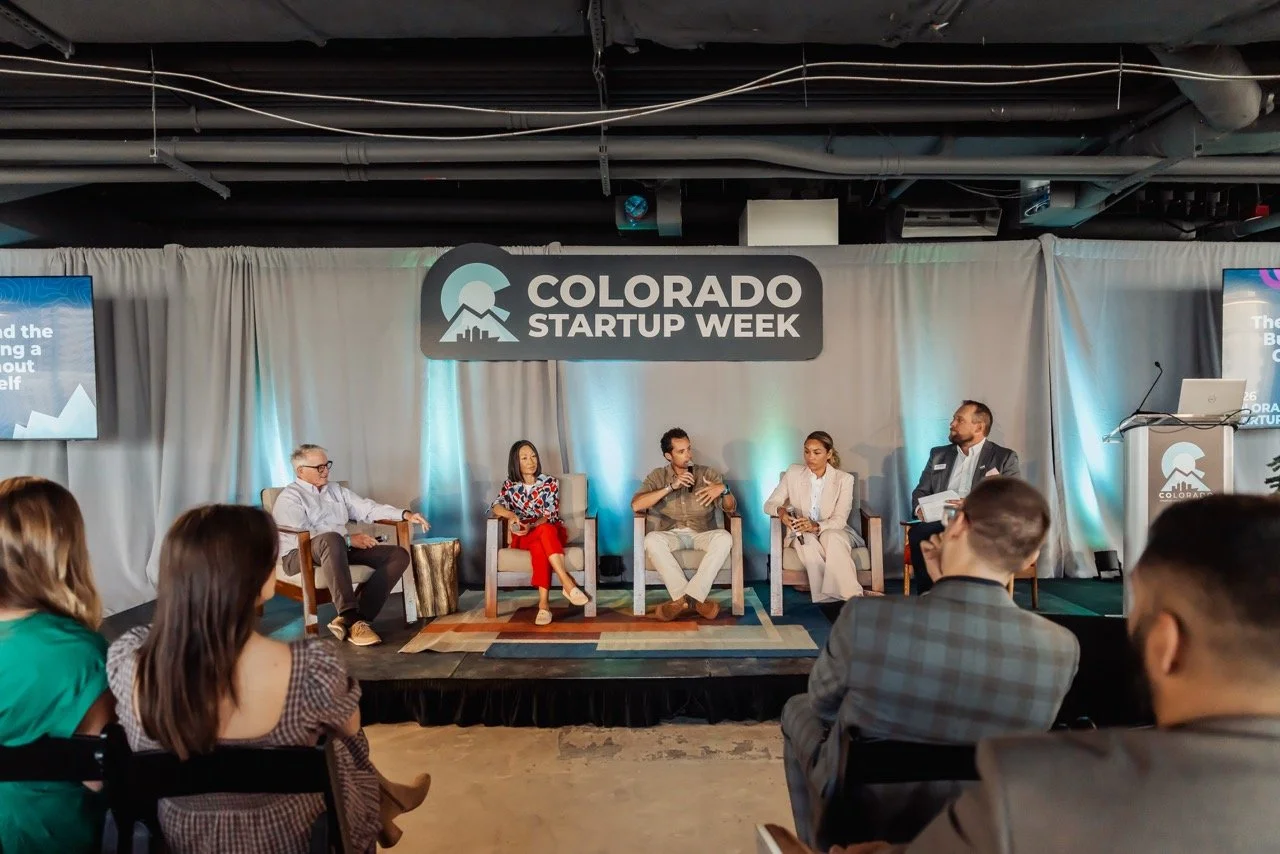
Featuring facilitator DJ Whetter and panelists Lani Dolifka, Ret Taylor, Amanda Gordon, and Tom Tompkins
Entrepreneurship conversations tend to focus heavily on the company: revenue, hiring, funding, growth, strategy.
‘The Leader Behind the Business’ turned the attention toward the person carrying all of it.
Lani, Ret, Amanda, and Tom had a candid conversation about burnout, identity, delegation, joy, mistakes, and the difficulty of creating boundaries when the business is always asking for more.
Tom described the business as an organism that will consume as much time and energy as its founder is willing to give it. His point was an important one: what's healthy for the founder is ultimately healthy for the business.
Lani put it another way: “You are not your company.”
Founders need to step away, be present with their families, make mistakes, and have needs that exist completely outside of their businesses. That also means building a company that can function without the founder carrying every piece of it.
The panel explored the difference between assigning work and truly letting go. Tom described delegation as allowing someone else to approach the work their own way, stumble sometimes, learn, and potentially discover a better way of doing things. Lani spoke about surrounding yourself with people who care deeply about what you're building and can build alongside you.
Ret shared that he once believed the answer to a hard season was simply to work harder. An experience climbing Denali challenged that belief when a storm forced his group to turn around. Sometimes effort isn't the only variable that matters.
Amanda brought another dimension to the conversation when she talked about how entrepreneurship has changed her personally. As she put it, “You are also becoming on this journey.”
Building a company changes the founder, too. And building something meaningful shouldn't require losing yourself in the process.
Fireside Conversation: Seth Levine, Foundry & Mick Freeman
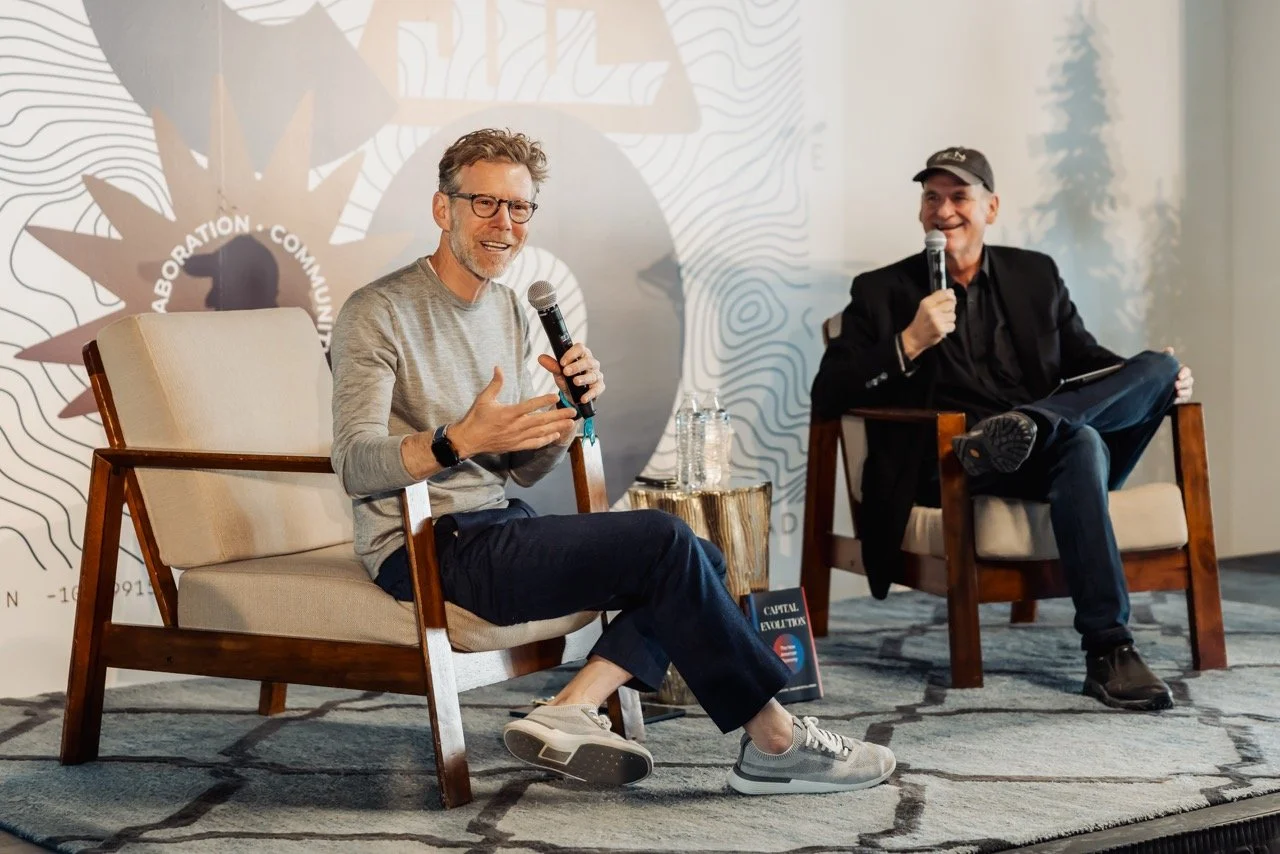
Featuring Seth Levine, Co-Author of ‘The New Builders’, and BEN CEO & Executive Director Mick Freeman
The fireside conversation with Seth Levine and Mick Freeman widened the lens beyond the individual founder to the entrepreneurial ecosystem around them.
Seth challenged attendees to “put yourself in rooms where you are uncomfortable.”
For him, that meant intentionally seeking spaces where the people, ideas, and experiences around him challenged his own. The goal wasn't necessarily agreement. It was understanding.
As Seth put it, “It's really, really hard to understand how other people think when you just dismiss them.”
The conversation also explored access to capital and ownership. Seth discussed the disconnect he sees between who is starting businesses, and who has access to the capital needed to grow them. He broadened the conversation beyond venture capital and asked another important question: “How do we create more owners?”
The discussion challenged attendees to think about economic opportunity as more than creating jobs, and to consider how more people can participate in ownership and benefit from the value they help create.
But one of the simplest ideas of the conversation may have been the one that connected most directly to BEN.
“Find someone else to help.”
Mick brought that idea directly back to the Give First philosophy that has long been part of BEN's approach to Colorado's entrepreneurial community.
Entrepreneurship works better when knowledge, experience, relationships, and opportunities continue moving through the ecosystem. The founder who needs advice today may be the person giving it tomorrow, the introduction someone makes now may create an opportunity years down the road, and sometimes helping someone else move forward reminds us how much we've learned along our own journey.
What I Know Now: Lessons on Leadership, Growth & Scaling from Women Founders & CEOs
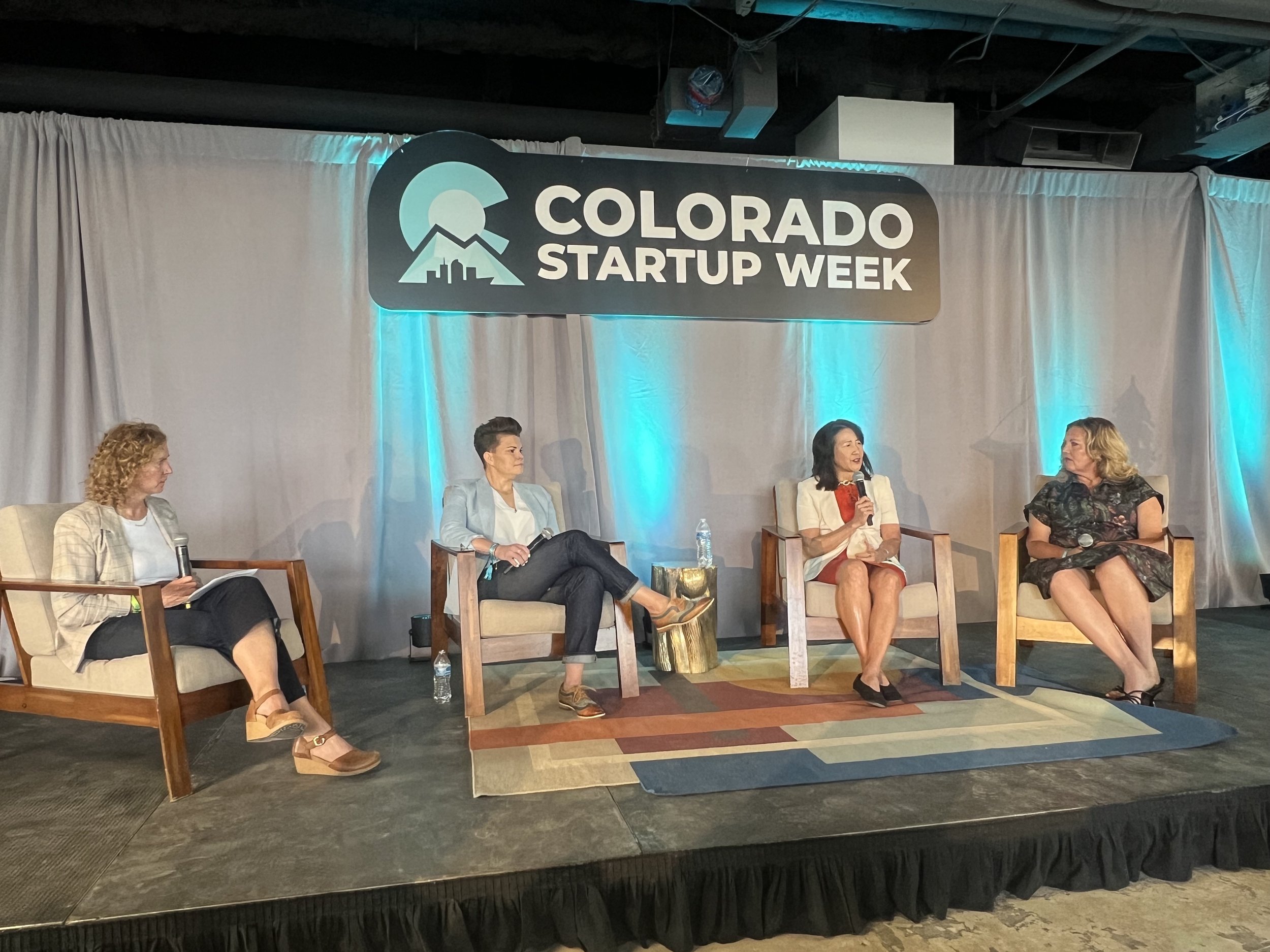
Featuring facilitator Lisa Pedersen and panelists Erin Fletter, Paige Wiese, and Helen Young Hayes
There are lessons you can learn from a book, podcast, class, or business plan… and then there are the lessons that only come from actually building something.
That was at the center of ‘What I Know Now’, where Erin, Paige, and Helen shared the lessons they have earned through starting, funding, leading, and growing their businesses.
Helen summed up one of those lessons simply: “Start with passion, fill it with analysis, and get ready to pivot.” She also reminded the audience that mistakes are often where the best learning happens.
Passion matters, but the conversation made it clear that passion alone isn't enough. Founders need to understand their numbers, know why they're making the decisions they're making, and be prepared for their role to change as the company grows.
Erin captured that evolution particularly well, “The founder who founded the business isn't necessarily the same founder the business needs to scale.”
Eventually, founders can become the bottleneck, and growth requires learning to rely on other people and systems.
The panel also explored one of the biggest decisions founders face: how to fund growth.
Paige and Helen both spoke about self-funding their businesses, while Erin discussed the tradeoffs that come with outside capital. There wasn't one funding path presented as the answer. Instead, the conversation came back to understanding what the business needs, what the money will be used for, and what tradeoffs a founder is willing to make.
And perhaps most importantly, the conversation reinforced the value of using the resources already around you.
As Paige shared, resources like BEN and the SBA can be incredibly valuable and are still underutilized by many entrepreneurs. Erin shared an even more personal example: during one of the hardest financial moments in her business, it was people in her community who stepped forward and offered help.
Sometimes the next resource a founder needs isn't another strategy, it's another person.
Maximizing the Mentor Match
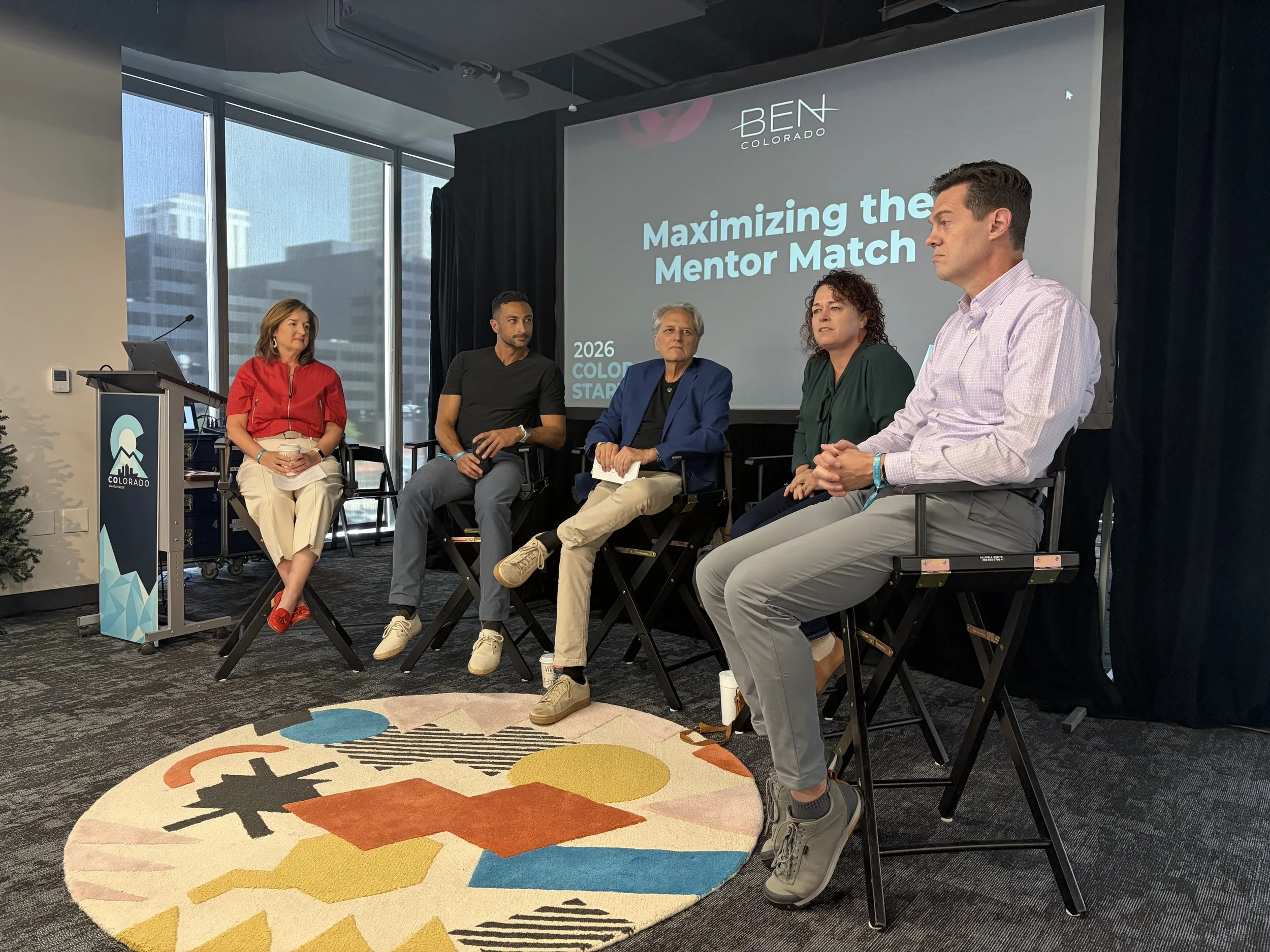
Featuring facilitator Kay Henze and panelists Colleen Kazemi, Bill Capsalis, Mike Wagstaff, and Scott Walker
One of the most memorable analogies from ‘Maximizing the Mentor Match’ came from Mike Wagstaff, “finding a mentor is a little like dating.”
You meet, you see if you click, and sometimes a relationship develops organically over time. The important thing is being willing to put yourself out there and start the conversation.
A strong mentor match is about finding people who have walked a path you want to walk, building trust, and developing a relationship where both sides can be candid. Scott spoke about the role vulnerability plays in building that trust. Colleen encouraged entrepreneurs to simply ask for help. Kay reminded attendees that making mentorship valuable requires intentionally carving out time for it.
Bill encouraged founders to get more specific about what they're looking for from a mentor. As he explained, “80% of business DNA is the same. It’s the 20% where the deep expertise lies.” If you have the 80% covered, identify the 20% where someone else's experience can be most valuable. He recommends that once you have their time, respect it. Come prepared. Have an agenda. Know what you want to work through.
Good mentors aren't there to run the business for you. As Mike explained, they're there to ask questions that help you find the answer that's true for you, and that human element feels especially relevant right now.
The panel acknowledged that AI can provide access to an enormous amount of information and guidance. But there are parts of mentorship that technology can't replicate: relationships with people who know you, understand the context around your decisions, challenge you, connect you to others, and stay with you through the roller coaster of entrepreneurship.
As Scott put it, maybe the trick in the age of AI is actually to ‘go old school’ and lean further into people.
Four Conversations, One Entrepreneurial Community
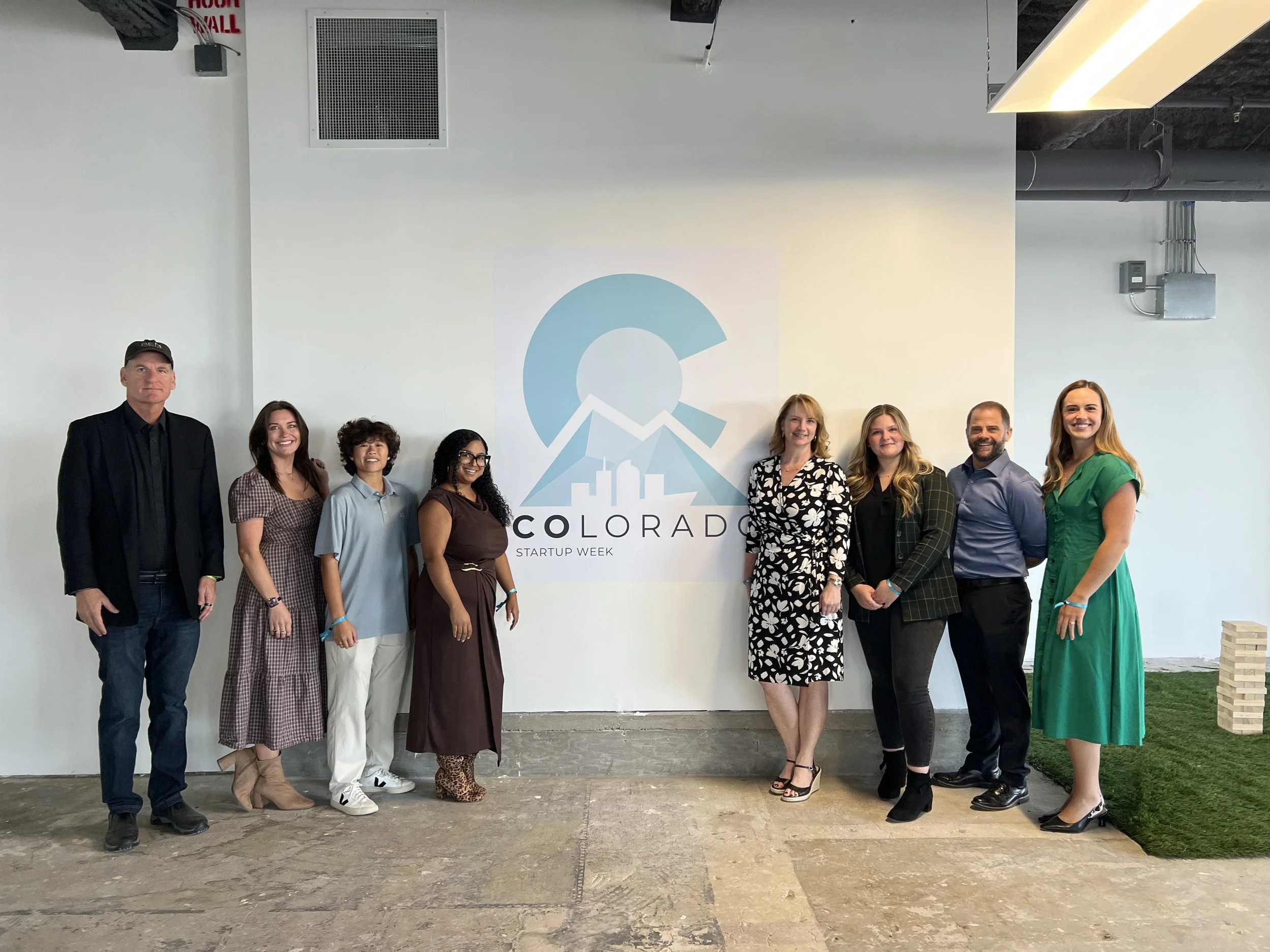
Across these four sessions, the conversations covered everything from funding and scaling to mentorship, burnout, ownership, and community, but underneath them were remarkably similar ideas.
Build the business, but invest in the person building it. Know your numbers, but know why you're building in the first place. Ask for help before you desperately need it. Surround yourself with people who will challenge you, support you, and ask better questions. Use the resources available to you. And when you have something to give, give it.
That's what a strong entrepreneurial ecosystem looks like: People learning from one another, sharing what they've earned through experience, opening doors, and making the journey a little less lonely for the person coming next.
We're grateful to DJ Whetter, Lani Dolifka, Ret Taylor, Amanda Gordon, Tom Tompkins, Seth Levine, Mick Freeman, Lisa Pedersen, Erin Fletter, Paige Wiese, Helen Young Hayes, Kay Henze, Colleen Kazemi, Bill Capsalis, Mike Wagstaff, and Scott Walker for sharing their time, experiences, and perspectives at Colorado Startup Week.
We're proud to keep creating spaces where Colorado entrepreneurs can learn from each other, find the people and resources they need, and give back to the community that's helping them grow.